Thursday, February 20, 2020

The Misadventures of Diddley Bow

Hello and welcome to my second Action Project for my STEAM course, Light, Sound, and Time. In this unit, Sound, we took a deep dive into human hearing, sound waves, and the Doppler effect. The Doppler effect is the phenomenon of a sound coming towards you sounding higher and then lower when that sound is moving away from you. Human ears hear by collecting sound vibrations into the eardrum, from there it moves through small bones called the ossicles, then the vibrations get converted into nerve impulses by the cochlea. 
 We also took part in some amazing field experiences. One example was an amazing panel with four deaf (and one interpreter) members of The Chicago Hearing Society. There, we discussed the future of American Sign Language and assistive technology. For this action project, we created our own playable guitars called diddley bows. I hope you enjoy this project.

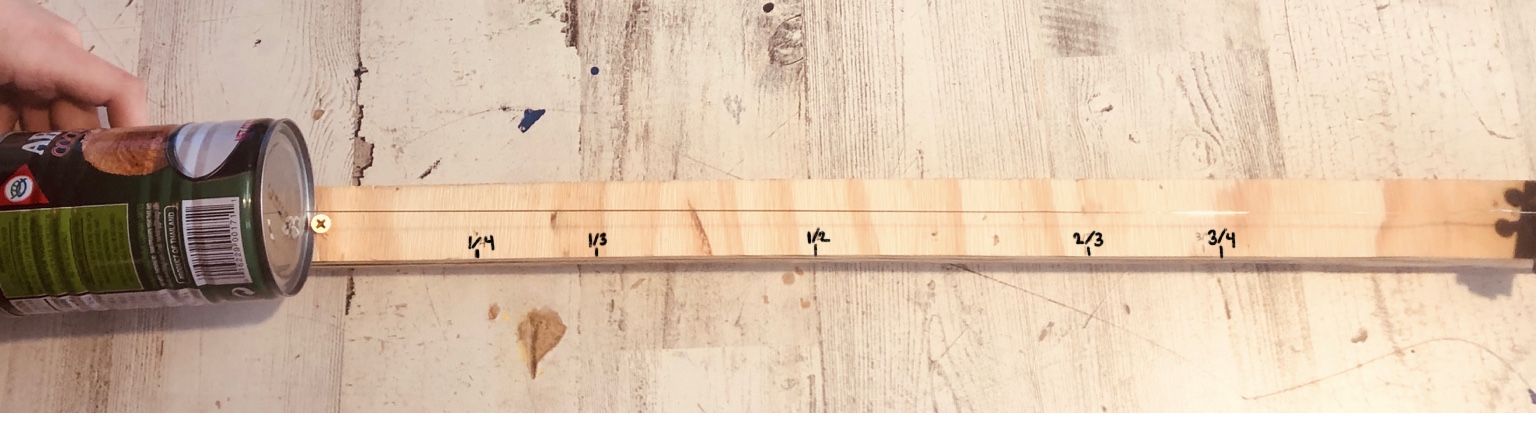
This is an image of my diddley bow with the harmonics marked. The harmonics show where to place the slider in order to shorten or lengthen the soundwave, therefore, changing the pitch of the sound.


TN "DIDDLEY BOW HARMONICS" 2020


In the end, this project was fun, yet challenging. It was a difficult task to build the diddley bow but now that it is all said and done I am very proud of what I built. 

Thursday, January 30, 2020

Black History For More Than a Month

Hello and welcome to my first Action Project for my humanities course, A Nations Argument. In this unit, we took a look at America's declaration of independence and the syllogisms within it. We also explored other countries' declarations. As for Field Experiences, we went to Alderman Walter Burnett Jr's office and talked with him about his life as an Alderman and his special connection with the community. In this Action Project, we are diving into declaring independence from our typical course structure and looking at independent studies. I hope you enjoy my argument on why we need more black history and literature in our curriculum.

Recently I have noticed that in my school career I have read only four pieces of literature by black or brown writers. Three of those pieces were with my first and (so far) only black teacher. I am declaring independence from only learning about black history in the form of enslavement and Dr. King (only on his birthday).  I declare independence from being the scapegoat in situations where my white teachers feel uncomfortable. I declare independence from only knowing one side of my history.

The purpose of school and learning is to forward students in life. I strongly believe that a school is a place that is meant to allow you to explore and learn. The purpose of learning black history is so that we as black people are able to know that we are more than just the descendants of slaves. That we are able to come together as a community and fight for equality. My unalienable rights are to feel acknowledged in my learning environment and to be able to learn my full history. This is an expression of my rights because this class will be all about black history before and passed slavery.


Syllogism
-P1 Black students are forced to attend institutions created by people who do not understand their experiences
-P2 We as black students have the right to be able to read literature by black folks that seek to educate and also entertain. 
-P3 The American education system has forgotten about people of color’s history aside from the part where white oppressors and saviors are the headlines
-P4 White students are allowed to learn about their history by default without having to seek extracurricular studies. 
Therefore, it is only fair that students of color are allowed the privilege of learning their history inside of their school's curriculum.


Image result for black history heroes
Keith Tyler "Power Fist" 2015
                                                     
Course Title: Diving Deeper into Black History, Literature, and Culture 

Guiding Question: What black history has been erased by the whitewashed education system?

Historical Evidence: In 1964, Black Americans founded freedom schools meant to organize and educate Black people to achieve equality. This was a temporary solution to a permanent problem that still looms over the Black community. I strongly believe that the ideals and teachings from the freedom schools should be blended into our education system today.

Resources:
  Books: The Fire Next Time by James Baldwin
The Hate U Give by Angie Thomas
Kindred by Octavia Butler
 
Plays: Simply Heavenly by Langston Hughes
For Colored Girls Who Have Considered Suicide When The Rainbow Is Enuf -Ntozake Shange

Partnerships: ETA Creative Arts Theater


Course Details

Unit 1: Before and After
  • Digs deeper into where enslaved people come from and Africa before colonization
  • Dives into life after emancipation and some attempts of liberation
Unit 2: Black Literature
  • Students will read and critically discuss books by black writers 
  • This unit has a main focus on fiction written by black writers
Unit 3: Black entertainment and Culture
  • This unit has a main focus on pop culture, fashion trends, plays and television 
  • Students will critique plays and television 
Desired outcomes  
  • Students will gain a greater understanding of black history and culture 
  • This class will allow students to be inspired by writers who are like them

All in all, I am very excited about this independent study. I hope that I will be able to actually study this, even if it ruffles some feathers. I decided to focus on black writers from the 20th and 21st centuries because I feel that this course will focus more on current black culture. I feel that writers from those centuries touch on the current culture more effectively than the 18th or 19th centuries. 


Sunday, January 26, 2020

Put a Pin in it| A PINteresting Experiment With Pinhole Cameras

Hello and welcome to the first Action Project of my winter term STEAM course, Light, Sound and Time. In this unit, Light, we discussed whether light was a wave or particle, similar triangles, sine, cosine, tangent, and how light equals energy. We tried out a really "sweet" experiment with chocolate to show the concept of light equals energy. Finally, we began work on this action project, which is making a pinhole camera. I was very excited to do this project because one of my interests outside of school is photography, and this is a new type of photography that I have never tried before. In order to develop our photos, we took a Field Experience to Harry S. Truman College where we met with Ignacio Alvarez who took us to the darkroom and taught us how to develop photos. Sadly, my photos did not turn out as expected but, I still learned a lot about film photography and its relation to light.


Altogether I really enjoyed this Action Project because of the art element. I love it when I am able to add in my extracurricular interests into my school action projects. The most interesting part of this unit was diving into the human eye. It was cool to me to see the evolution of the human eye and to think about where it will be in another 1000 years.

Thursday, November 14, 2019

This Bike Protectz You!

Hello and welcome to my last Action Project in Design and Engineering.
This ap asked us to design a bike that fits the needs of a specific persona.
For this unit of Design and Engineering, we went to WorkingBikes, Earth Rider and a representative from Divvy came to speak to us. Working Bikes was a hands-on experience breaking down pedals, Earth Rider was a hands-on riding experience and Divvy was a business experience. I think that this research qualifies me to design this bike for my persona. I hope you enjoy this project.


Overall this project was very fun, yet stressful. I was able to use my own ideas to make a bike that I think works perfectly for my persona. If I could change anything about my assignment I would give myself more time to make a more effective 3D model.

Wednesday, November 13, 2019

The Hair Issue

TN "The Front Cover" 2019

Hello and welcome to a very special action project for Rhetoric. For this action project, we were asked to create an art piece that will bring people together around a certain issue. This is based on the tribute to the Chicago Freedom Movement in Marquette Park. The piece notably featured many languages, something I thought was very important for creating my own work of art to bring people together. I am especially proud of this AP and I hope that this translates through the work that I put into it. There are 2 pieces to the artwork. First, is a commercial parody to bring light to lack of diversity in television and second, mock magazine editorial photographs to highlight the lack of diversity in fashion magazines.


                                                                           HAIR from T N on Vimeo.


TN "Nissrine" 2019
My Hair Is Fierce in French 

TN "Shanet" 2019
My Hair is Angelic in Spanish
TN "Georgette" 2019
My Hair is Good in Kirundi


Artist Statement

As a woman of color, I do not see myself reflected in the media.
Especially media that is meant to sell me something. I want to change this,
I want to change the narrative that the only time you can use a woman of color
on television or on print is when you are directly talking about problems surrounding us.
That is why I created this piece. This piece is meant to act as a mirror for women of color to be able to see themselves in spaces where they are usually ignored. When people look at this piece I want people to feel comfortable. I do not want this to feel foreign or different. This piece is meant to be art that challenges the status quo but is still allowed to be fun and beautiful. It should, however, start conversations in white spaces about why we don't see people like this in fashion magazines.
It's simply a fact that in the past 30 years only 30 women of color have been on the cover of Vogue Magazine. For scale, there have been 412 white women on the cover, and everything about that does not sit right with me. My piece is meant to show women of color as fashionable, without changing to make white Americans comfortable (hence the native languages represented). Not only are these publications racially-biased, but they are also colorist. In a recent study, 90% of WOC in magazines are either light or medium skin tones. Yes, you should feel embarrassed because the fact is that it is simply more profitable to market towards people of color, big corporations just don't want to.
I chose two media for this art piece because I wanted to show two different advertising methods. I thought photography would be best for a photo-shoot that showed these beautiful women of color editorially. The advertisement shows these women of color having fun which is a radical act in itself. It is very rare to see women of color having fun or not facing some type of adversity in mass media; this challenges that. I used Pathos throughout this art piece. The fun that is being had in the commercial appeals to pathos because it is so human. The beauty of the images also appeals to pathos. Ideally, I would want this piece to be a huge social media campaign that other women of color could add to. It would be really amazing to see all types of women from all around the world contributing to this art piece.


Citations 


Muller, Marissa G. “A New Study Shows Just How Bad Diversity in Hollywood Is.” W Magazine, 27 Feb. 2018

Neuendorf, Kimberly A. "The content analysis guidebook". Sage, 2016.


Owens, Tori. “As America Grows More Diverse, Fashion Magazine Covers Are Slow to Show Progress.” Peninsula Press, 25 Oct. 2017


Sunday, October 27, 2019

Why You Shouldn't Correct AAVE

Hello and welcome to my second Action Project for my Junior humanities course, Rhetoric.
For this AP we looked at Op-Eds and their power. We had an FE with Troy LaRaviere, the president of the Chicago Principal's Union. This FE was very touching for me as my Grandmother is a retired CPS teacher from the south side, where Troy LaRaviere also taught. I was inspired by his speech to write about African American Vernacular English. This is a dialect that some people use as an excuse to ignore black people. I thought that it was very important to bring attention to this age of "digital blackface" and explain the beauty and uniqueness of dialects. 


                Why You Shouldn’t correct AAVE


                                                            Via @ashoncrawley on twitter


Tik Tok culture has brought us modern-day minstrel shows- sans the blackface. The white folks of social media have taken trending black culture and turned it into the butt of a joke. From Instagram to Vine the most popular jokes have been “black people be like”. But, why? Why is the “easy” joke always racist? And it's not just Gen Z tik tokers who fall into this style of joke either. It's their parents too. C'mon, you can admit you've laughed at a white comedian imitating the black lady they saw in CVS or the black preacher they saw on tv. Maybe you complimented a black girl on how well-spoken she was just because she decided it was safer for her to use standard English in that situation.

So what's the problem with white folks using AAVE? There is always an assumption when you first meet someone. The unfortunate truth is that most people's assumption is based on learned racism. When those Instagram kids turn off their phones they can face the world without their stereotypes walking into a room before them. Still not convinced that it's a big deal? Let's dive deeper into it.


AAVE, or African American Vernacular English, is a dialect most commonly used in predominantly black spaces. It has been labeled by many as “incorrect”, however, learning how to dissect the dialect and “code-switch” is a vital skill. Code-switching is a necessary means of survival for all black Americans. Talking “white” is the only way we are even seen on a day to day basis. AAVE is not “uneducated,” AAVE is not “wrong,” and most importantly AAVE is not “ghetto.”

Arriel Vinson states that her classmates didn’t take her main character seriously because he spoke AAVE, though the character was extremely well educated and only used AAVE when speaking to friends or thinking to himself. AAVE is unfairly ridiculed by so many non-black poc, white folks, and even black Americans. In my own experience, in spaces like school and others, I work very hard to speak in a way that is comfortable for my listeners. I have felt the red-hot embarrassment of a slip-up, my use of “ain’t” or “finna” being taken as a joke or mocked and corrected, leaving me feeling that I have to reestablish myself as an “educated” person. There is nothing worse than walking into space, thinking that you made a good impression, and then hearing "oh, you speak so well". Yes, while this sounds like a compliment, I will ask you, when is the last time someone has to you this? My skin color walks into the room before I do, then my use of standard English. I often wonder if people who look like me ever see past my race or if I'm just the eloquent black girl.

Geoffrey K. Pullum affirms, “Those that speak AAVE don’t fail in speaking standard English they succeed in speaking African American English”.

Let's say you still are convinced that a person who speaks AAVE should be corrected. You may say "well, there is a time and place for everything."
To you I say, your privilege colors you vision, it tells you that everyone should be able to switch back and forth from standard English.
To you I say, if you work to understand AAVE you will hear that the person you looked over or ignored for being “ignorant” has a remarkable opinion covered in the deep-seated, rich, and beautiful culture of AAVE.


Addendum

In this Op-Ed, I used pathos as my rhetorical appeal. I used pathos because I felt that in order to get through to people about a culture that is different than their own it is best to use a common ground.

I used Anaphora “AAVE is not uneducated, AAVE is not wrong, and most importantly AAVE is not Ghetto.” Metaphor “I have felt the red-hot embarrassment of a slip up” and Allusion “C'mon, you can admit you've laughed at a white comedian imitating the black lady they saw in CVS or the black preacher they saw on tv.” I would like to submit this article to a prestigious newspaper like The New York Times. I know that the NYT has an audience that my Op-Ed imagines. My goal with this Op-Ed is to shake people into seeing people that they ignore, whether it be because of skin color, language, or vernacular. There are other dialects that get ignored as well like, Chicano English or Creole English. I want to express that these dialects are all so beautiful and they make our cultures so beautiful and untouchable.

Wednesday, October 2, 2019

Wanna Betta' Shovel?

In my first Action Project for my Junior STEAM class, Design and Engineering, we took a deep dive into empathy. Empathy is understanding and caring about another person's situation. This is an idea that designers use when making objects for consumers to use. This is what we did for this AP. Along with my partner LHM, we designed a shovel that was made to work for senior citizens with empathy in mind. To prepare for designing, I interviewed my mother while gardening to see what tools she likes and which tools she would change. As a class, we went Home Depot to see how consumers buy tools and how businesses accommodate the supply and demand.


Our new tool is a shovel that allows you to get leverage without compromising your balance.
It does this by having a place for your knees to be able to push into the shovel allowing you to dig deeper into hard soil without lifting your feet.
The additional part is the knee rest, this allows for better leverage and greater ability to dig into the soil.
This is an example of innovation and efficiency because the shovel has a new part that allows senior consumers to be comfortable and have the confidence to shovel without losing balance.
These are the ways our tool is better than the competition's:
Our shovel has a sleeker more “modern” look, it allows for better leverage than the average shovel and it allows the older consumer to not be worried they will fall while shoveling.
How? Our shovel uses a lever as a mechanism to access the knee rests. It is a first-class lever because the fulcrum is in between the input and output.


In my opinion, I really enjoyed this project. I liked being able to design and customize a tool that will work for almost every consumer. If I could change anything I would change the way that using the knee rests may ignore a potential consumer that cannot use their knees.

Frontiers

 Hello and welcome to my final action project for my STEAM class Frontiers. In this action project, we were asked to create a conference pos...